
News & Events
LDPE vs. HDPE: When To Use Which Plastic Material
Choosing between LDPE and HDPE can affect the performance and durability of your products as well as your overall manufacturing efficiency. Both materials are widely used across industrial applications, but each offers different advantages depending on the environment and end use. Manufacturers, distributors, and purchasing teams often compare these materials when sourcing protective components, packaging products, and molded parts.
Understanding when to use LDPE and HDPE plastic materials helps these companies avoid unnecessary wear, cracking, or product failure, ultimately leading to a better experience for their customers.
Understanding the Basics of LDPE and HDPE
LDPE stands for low-density polyethylene, while HDPE stands for high-density polyethylene. Both are thermoplastics derived from petroleum, but their molecular structures create very different physical characteristics.
LDPE has a more branched molecular structure, giving it greater flexibility and softness. It is commonly used in products that need bendability, cushioning, or resistance to stress cracking. HDPE has a tighter molecular structure that creates a denser and stronger material. This makes it more rigid and impact resistant in demanding environments.
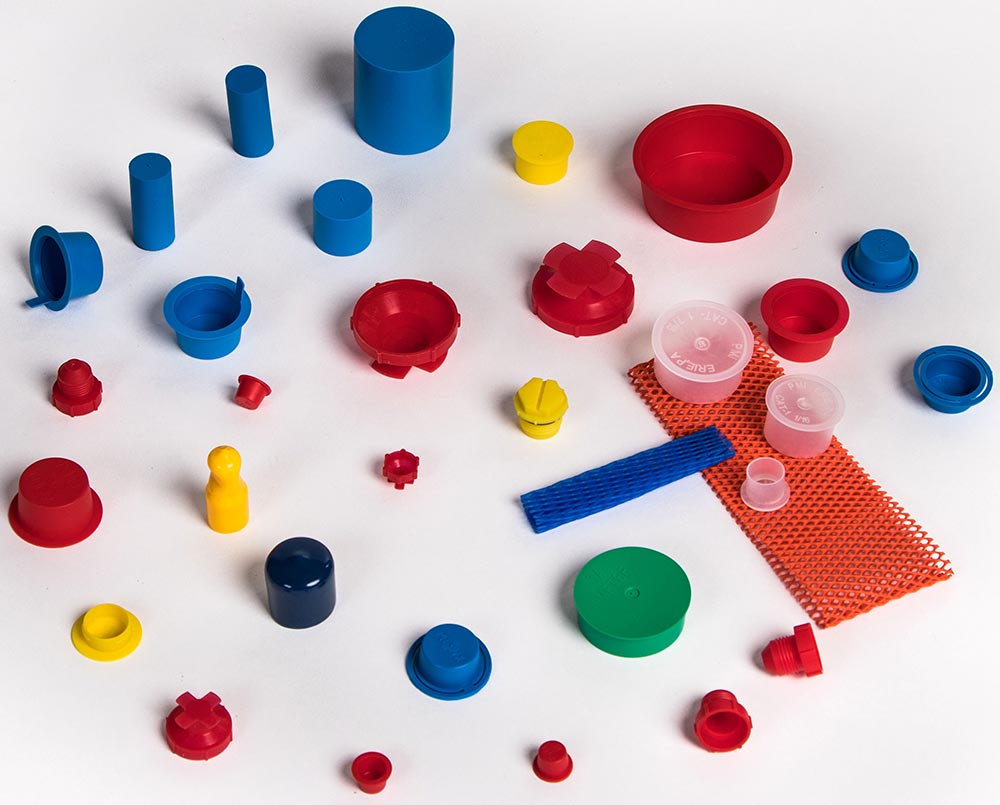
Because of these structural differences, manufacturers select LDPE and HDPE for entirely different production goals. A flexible cap designed to stretch over fittings may require LDPE, while a rigid protective plug may perform better with HDPE.
Key Characteristics That Set Them Apart
Although both materials belong to the polyethylene family, they respond differently to pressure, temperature, and repeated use. Understanding their core properties can simplify material selection during product development.
LDPE is typically associated with:
- Greater flexibility and softness
- Better stress crack resistance
- Improved transparency and smooth surface finish
HDPE is commonly valued for:
- Higher tensile strength and rigidity
- Better chemical and moisture resistance
- Stronger impact durability in industrial settings
These performance differences influence how molded products behave during shipping, installation, and long-term use. Industries with demanding operational conditions often rely on HDPE for added durability, while companies prioritizing flexibility may choose LDPE.
When LDPE Makes the Most Sense
LDPE works well in applications where flexibility is critical. The material bends easily without breaking, making it useful for protective components that need to fit tightly over irregular shapes or threaded connections.
Protective caps, tubing covers, and soft sealing components are often manufactured with LDPE because the material can absorb impact while remaining lightweight. In shipping and storage environments, this flexibility reduces damage caused by vibration or movement.
Manufacturers also choose LDPE when products need a softer feel or easier installation. Workers can often remove and install LDPE parts quickly without damaging surrounding components. This makes LDPE especially useful for temporary protection during transport or assembly.
Several common LDPE applications include:
- Flexible protective caps for threaded fittings
- Soft tubing inserts and packaging components
- Lightweight coverings for temporary protection
LDPE can also perform well in colder environments because it maintains flexibility at lower temperatures. For industries that require reusable protective products, this added resilience can extend product life.
Where HDPE Delivers Better Performance
HDPE is often preferred when strength and structural stability are the main priorities. Its dense molecular structure provides excellent resistance to chemicals, moisture, and physical impact.
Industrial manufacturers frequently use HDPE for components exposed to rough handling or outdoor conditions. The material resists deformation better than LDPE, helping products maintain their shape under stress.
HDPE is also common in applications where heavier loads or higher temperatures are involved. Rigid plugs, durable caps, and industrial containers often depend on HDPE because it withstands repeated use without significant wear.
In industries such as automotive, aerospace, and agriculture, HDPE products help protect sensitive parts during storage and transportation. The material's durability also supports long production runs where consistency matters.
Another advantage of HDPE is its resistance to moisture and chemicals. Facilities handling oils, cleaning agents, or industrial fluids often rely on HDPE components because they hold up well in demanding environments.
Comparing Flexibility, Strength, and Durability
One of the most important considerations when comparing LDPE and HDPE is the need to balance flexibility with strength. While both materials are durable, they excel in different ways.
LDPE’s greater flexibility and elasticity allow it to conform to surfaces and absorb movement without cracking. Products made from LDPE are generally easier to squeeze, stretch, or bend during installation.
HDPE, on the other hand, offers superior rigidity and tensile strength. It performs better under pressure and resists punctures more effectively. When products need to maintain their shape during heavy handling, HDPE often becomes the better choice.
Temperature exposure can also influence material selection by changing the flexibility and durability of these materials. LDPE generally handles cold conditions more effectively because it remains pliable. HDPE typically performs better in hotter environments where structural stability matters more than flexibility.
Manufacturers evaluating long-term durability should also consider environmental exposure. HDPE often delivers stronger resistance to ultraviolet light, moisture, and harsh chemicals, making it suitable for more demanding industrial settings.
Material Selection for Electrical and Industrial Components
The choice between LDPE and HDPE is especially important for electrical and industrial applications. Protective molded parts must withstand environmental conditions while maintaining reliable performance.
For example, electrical wire connector caps may require different material properties depending on the application. Flexible LDPE components can help simplify installation and removal in situations where temporary protection is needed. HDPE may be preferred for applications requiring more rigid protection against crushing or abrasion.
Industrial operations also consider production efficiency during material selection. LDPE can simplify molding for softer products with flexible walls, while HDPE supports parts that need tighter structural integrity.
Generally, purchasing teams evaluating custom molded parts can make more informed decisions when they look beyond initial pricing. Long-term reliability, installation speed, and replacement frequency all influence the true cost of a molded component.
How Manufacturing Requirements Influence Material Choice
Production goals often determine whether LDPE or HDPE is the better fit. Molded products must perform consistently while manufacturing at scale at a fair price.
LDPE generally processes well for softer components with thinner walls. Its flexibility can help reduce cracking during production and use. Manufacturers producing custom caps, inserts, or temporary protective products may prefer LDPE because of its adaptability.
HDPE supports applications that require higher dimensional stability and stronger structural performance. Products designed for repeated industrial use often benefit from HDPE's rigidity and durability.
Manufacturers also consider secondary factors such as:
- Production efficiency during molding
- Environmental exposure requirements
- Product lifespan expectations
Selecting the Right Plastic for Your Application
Choosing between LDPE and HDPE depends on how the final product will be used. Flexible applications typically benefit from LDPE, while high-strength industrial environments often require HDPE.
Companies should evaluate installation requirements, environmental exposure, and long-term durability before finalizing material selection. A product designed for temporary protection during shipping may require very different properties than a component exposed to industrial chemicals or repeated handling.
Experienced molding partners can identify the right material based on application demands, production goals, and performance expectations. This guidance becomes especially valuable for custom molded products where material performance directly affects customer satisfaction.
At PMI, we work closely with manufacturers, distributors, and purchasing teams to develop dependable molded solutions for demanding industries. From custom caps and plugs to protective molded components, our team helps customers select materials that align with both performance requirements and production goals.
Understanding when to use LDPE and HDPE plastic materials can help businesses improve product protection, reduce replacement costs, and support more efficient manufacturing operations. If you are evaluating molded products for industrial or electrical applications, including electrical wire connector caps, we are ready to help you find the right solution for your operation.