

News & Events

Polyethylene vs. Silicone: Applications and Benefits
Material choice can shape a product’s cost, durability, flexibility, and performance. Polyethylene and silicone both appear across a broad range of industries, but their properties suit very different roles. A clear look at polyethylene vs. silicone that highlights their applications and benefits can help manufacturers narrow their options before a project moves too far ahead. Refer to our guide below to learn which material is ideal for your process.
What Is Polyethylene?
Polyethylene is a thermoplastic polymer valued for its versatile mix of durability, chemical resistance, low moisture absorption, and relatively low cost. Manufacturers can heat the material, form it into a desired shape, and allow it to cool into a solid part. Different polyethylene grades offer distinct combinations of stiffness, flexibility, density, and impact resistance.
Two familiar varieties are low-density polyethylene (LDPE) and high-density polyethylene (HDPE). LDPE has a softer, more flexible character, whereas HDPE has greater stiffness and strength. That range gives manufacturers room to select a grade based on the physical demands of a part.
What Is Silicone?
Silicone is a synthetic elastomer with a very different feel and performance profile. Its rubber-like structure provides flexibility, elasticity, and resistance to a broad span of temperatures. Silicone also has strong resistance to moisture and many environmental conditions.
Unlike a rigid thermoplastic part, a silicone component can flex or compress and then return close to its original form. This trait suits seals, gaskets, flexible tubes, and similar components. Some silicone formulations also serve medical, food-contact, and electrical applications, subject to the grade and relevant regulatory requirements.
Benefits of Polyethylene
Polyethylene gives manufacturers a useful balance of physical performance and economical production. Its resistance to many chemicals helps it perform in industrial environments where a component may encounter oils, solvents, acids, or other substances. The exact resistance depends on the polyethylene grade, chemical, concentration, and exposure conditions.
The material also absorbs very little moisture. That trait can benefit parts exposed to damp environments or direct contact with water. Polyethylene has good electrical insulation properties as well, so certain grades appear in electrical and electronic components.
Cost presents another advantage. Polyethylene is widely available, and many grades support high-volume production at an attractive material cost. For disposable parts, protective components, containers, and industrial products, that combination can offer practical value.

Common Polyethylene Applications
Polyethylene appears in products that range from flexible films to rigid industrial parts. Manufacturers use different grades based on the strength, flexibility, chemical resistance, and dimensional needs of each application.
Common uses include:
- Protective caps and plugs
- Bottles and containers
- Pipe and tubing
- Industrial components
- Household products
- Electrical insulation
- Shipping and product protection
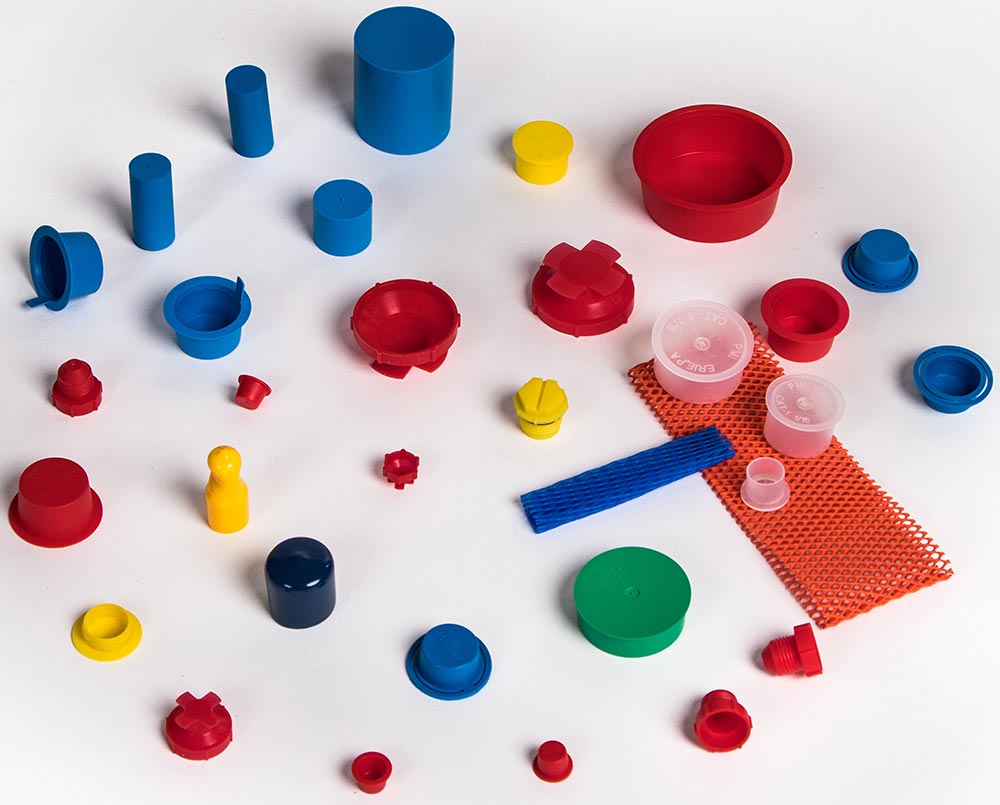
Protective parts offer a good example of polyethylene’s practical appeal. A cap or plug may need enough flexibility for installation plus enough toughness to protect a fitting, tube, or other component from dirt and damage. Polyethylene can provide that balance without an unnecessarily complex material system.
Benefits of Silicone
Silicone stands apart for its flexibility across a broad temperature range. Many formulations retain useful elastomeric properties under heat or cold that can cause some thermoplastics to lose desired performance. Exact temperature limits vary by formulation, so specifications deserve careful review before material selection.
Its elasticity also supports parts that face repeated compression or flex. A silicone seal, for example, can conform to adjacent surfaces and recover after pressure changes. This behavior helps explain its presence in seals, gaskets, flexible connectors, and similar products.
Silicone also offers strong resistance to ozone and ultraviolet exposure. For exterior applications, those properties can provide an advantage over materials with less environmental resistance. Specific performance still depends on formulation, part design, exposure, and service conditions.
Common Silicone Applications
Silicone tends to appear where flexibility, temperature resistance, or environmental exposure takes priority. Its properties have led to use across automotive, industrial, consumer, medical, and electrical markets.
Typical applications include:
- Seals and gaskets
- Flexible tubing
- O-rings
- Electrical insulation
- Kitchen products
- Medical-grade components
- Automotive components
A gasket near a heat source illustrates the appeal. The part needs to stay flexible, conform to surfaces, and tolerate temperature changes throughout its service life. A suitable silicone formulation can address that set of demands.
Differences in Performance
Highlighting the applications or benefits of polyethylene and silicone helps with identifying the strong performance attributes of both materials. The largest contrast comes from their basic physical behavior. Polyethylene is a thermoplastic, so manufacturers can heat and form it through thermoplastic production methods. Silicone is generally an elastomer, so it behaves more like rubber after cure.
Polyethylene can range from soft and flexible to fairly rigid, based on grade and part design. Silicone usually provides greater elasticity and can recover after deformation. That distinction matters for components that need to compress, stretch, or create a seal.
Temperature requirements also separate the two materials. Silicone generally performs across a broader temperature span, particularly at elevated temperatures. Polyethylene can still serve many everyday and industrial environments, but its usable temperature range depends heavily on grade.
Cost may favor polyethylene for many high-volume applications. Silicone materials and their production processes can carry higher costs, though performance demands may justify that expense. The right comparison comes from the complete application rather than material price alone.

Chemical and Environmental Resistance
Both materials can resist moisture, but their broader resistance profiles differ. Polyethylene has strong resistance to many chemicals, a trait that supports its use around industrial fluids and corrosive substances. Compatibility charts and material tests can confirm suitability for a specific chemical environment.
Silicone has excellent resistance to weather, ozone, and UV exposure. Those characteristics can suit components exposed to outdoor conditions for extended periods. Chemical resistance varies, though, and some oils, fuels, solvents, or acids can affect certain silicone formulations. Neither material deserves an automatic selection based on one property. Temperature, chemical exposure, mechanical stress, service life, dimensions, and cost all contribute to the final choice.
Applications and Benefits at a Glance
Polyethylene fits applications that benefit from chemical resistance, low moisture absorption, durability, and economical high-volume production. Its range of grades gives manufacturers several options for parts with different levels of stiffness and flexibility. Silicone suits applications that demand elasticity, temperature resistance, and strong performance under outdoor exposure. Seals, gaskets, and flexible components can take advantage of those characteristics. Neither material is universally superior; each serves a different set of product demands.
A thoughtful material choice starts with the part itself, its environment, and its expected service conditions. Polymer Molding has decades of experience with plastic components and custom mold solutions for industrial applications. Equip yourself with plastic pipe plugs made with the right material for your application.