

News & Events

A Guide to Modern Plastic Manufacturing Processes
Plastic products appear in nearly every industry, from aerospace and automotive components to medical devices and industrial protection. Behind every finished part stands a manufacturing process chosen to match performance goals, production volume, material selection, and cost expectations. A guide to modern plastic manufacturing processes offers a closer look at the methods that shape today's products and the advantages each one brings. Examine the options available and connect with an experienced team that can help move your design from concept to production.
Injection Molding
Modern plastic manufacturing has advanced far beyond basic molding. New machinery, refined tooling, and high-performance resins allow manufacturers to produce parts with tighter tolerances and faster production rates. Each process serves a distinct purpose, so the right choice depends on the application rather than a one-size-fits-all approach.
A clear understanding of these methods helps engineers, purchasing teams, and product designers select the best path for long-term success. Injection molding remains one of the most widely used plastic manufacturing methods for high-volume production. Heated resin travels into a precision-built mold under pressure, then cools into a finished part before ejection. This process delivers repeatable dimensions across many production cycles.
The Power of Injection Molding
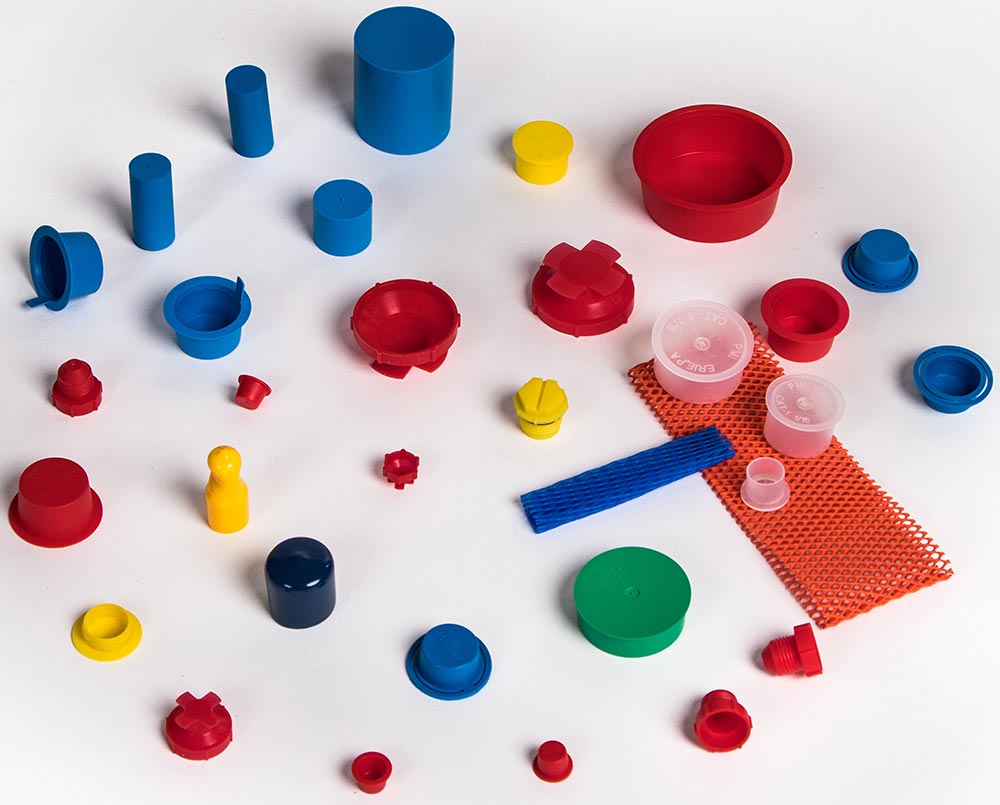
Manufacturers rely on injection molding for protective caps, plugs, medical components, consumer products, and automotive parts. Tight dimensional control supports complex geometries that would prove difficult through many other production methods. Once tooling reaches completion, production moves quickly with very little variation between parts.
Another advantage comes from material flexibility. Commodity plastics, engineering-grade resins, and specialty polymers all perform well through injection molding. Designers gain freedom to balance durability, chemical resistance, flexibility, or temperature performance without changing the overall production method. Equip your product with plastic injection molding parts today to see the benefits of this process up close.
Blow Molding
Blow molding produces hollow plastic products through compressed air that expands heated plastic inside a mold cavity. Bottles, tanks, reservoirs, and similar products represent common examples found throughout countless industries.
Several versions of blow molding exist, including extrusion blow molding and injection blow molding. Each option supports different product sizes, wall thicknesses, and performance goals. Manufacturers select the process based on production volume and final part requirements rather than appearance alone. Uniform wall thickness supports durability across hollow products. Large production runs also benefit from rapid cycle times, helping manufacturers meet demanding schedules without sacrificing consistency.
Extrusion
Extrusion creates continuous plastic profiles instead of individual molded parts. Heated resin passes through a shaped die that forms tubing, rods, channels, seals, and countless custom profiles. After cooling, manufacturers cut the material into desired lengths.
Construction, agriculture, healthcare, and industrial equipment all depend on extruded plastic products. Since production continues without interruption, extrusion serves high-volume applications exceptionally well. Long production runs also reduce waste compared with many alternative manufacturing methods. Material selection plays a large role in extrusion performance. Flexible polymers support soft tubing, while rigid engineering plastics produce structural profiles capable of handling demanding environments.

Compression Molding
Compression molding remains a valuable option for larger, thicker plastic components. Heated material enters an open mold cavity before pressure compresses it into the desired shape. Heat and pressure work together until the material cures completely. This process works particularly well with thermoset plastics. Electrical components, industrial equipment, and heavy-duty applications benefit from the durability these materials provide.
Lower tooling costs compared with certain alternatives also attract manufacturers that produce moderate production volumes. Large components with substantial wall thickness perform particularly well through compression molding. The process accommodates designs that might prove less practical through injection molding.
Thermoforming
Any guide to modern plastic manufacturing processes must discuss the thermoforming process. Thermoforming starts with a flat plastic sheet heated until pliable. Vacuum pressure or mechanical force draws the material across a mold surface, where it cools into its final shape.
Packaging, trays, equipment housings, and protective covers represent common thermoformed products. Tooling generally costs less than injection molds, creating an attractive option for lower production volumes or larger components. Design flexibility also stands out. Product revisions typically require less tooling modification than many other molding methods, allowing manufacturers to adapt more quickly when design changes arise.
Rotational Molding
Rotational molding creates hollow plastic products through gradual rotation inside a heated mold. Powdered resin coats the mold interior evenly before cooling into a seamless finished part. Storage containers, large tanks, playground equipment, and recreational products frequently rely on this manufacturing method.
Thick walls and stress-free construction contribute to impressive durability under demanding service conditions. Large parts benefit particularly well from rotational molding because no internal pressure shapes the material. That characteristic supports complex hollow designs without expensive tooling requirements found in other production methods.
Material Selection Shapes Product Performance
Manufacturing success depends on far more than machinery alone. Resin selection directly affects durability, flexibility, temperature resistance, UV stability, and chemical compatibility. Engineers evaluate product requirements before recommending a specific polymer.
Polyethylene remains popular for protective products thanks to excellent impact resistance and affordability. Polypropylene offers higher temperature capability along with strong chemical resistance. Nylon provides outstanding strength for demanding mechanical applications.
Specialty engineering plastics expand possibilities even further. Certain formulations withstand aggressive chemicals, elevated temperatures, or continuous mechanical stress that commodity plastics cannot tolerate. Material selection becomes part of the overall engineering strategy rather than an afterthought.

Tooling Precision Drives Production Quality
Every molded part begins with quality tooling. Precision-machined molds determine dimensions, surface finish, repeatability, and production efficiency throughout the life of a project. Experienced tool designers account for resin shrinkage, cooling rates, part ejection, and gate placement long before production starts.
Careful planning reduces cosmetic defects and dimensional variation across large production runs. Well-built molds also deliver long service life. Manufacturers that invest in durable tooling gain reliable performance through years of production with proper maintenance and routine inspections.
A Guide to Better Results
Modern plastic manufacturing offers far more than one production method. Injection molding, extrusion, blow molding, thermoforming, compression molding, and rotational molding each deliver distinct advantages for specific applications. When your next project calls for dependable plastic components, partner with a manufacturer that combines technical knowledge with responsive customer service.
Polymer Molding has supplied high-quality plastic products for decades, helping customers across numerous industries achieve reliable production with confidence. Use the knowledge above to contact a professional today to discuss your application and discover the manufacturing solution that fits your goals.