

News & Events
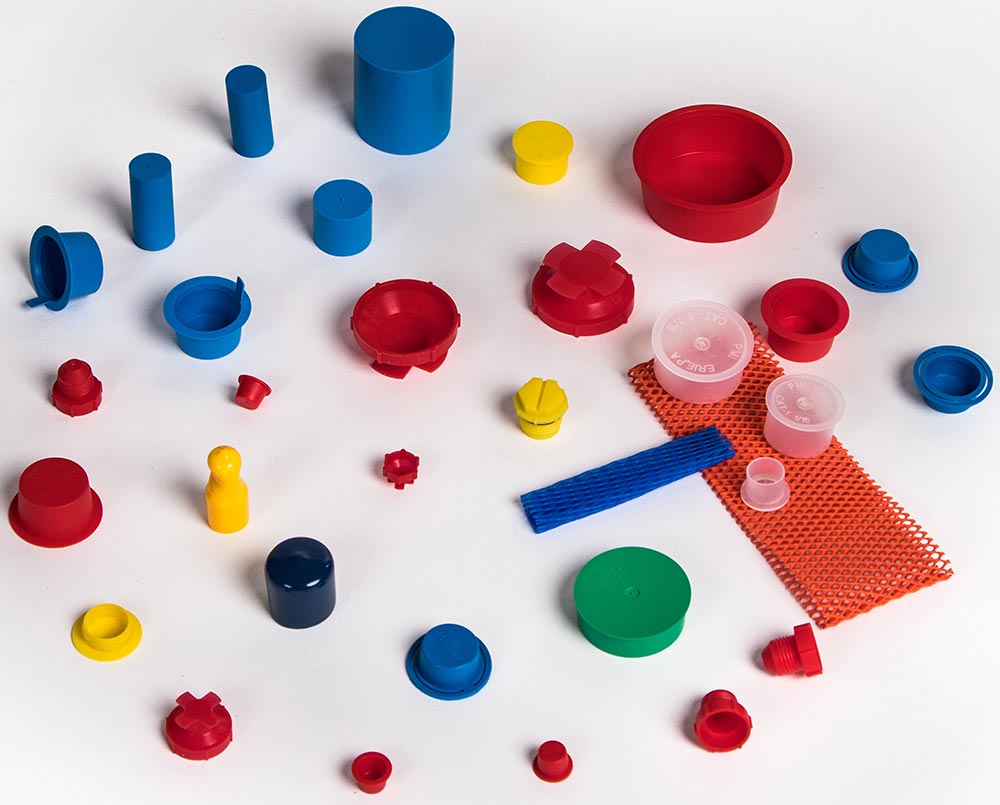

8 Key Reasons To Choose Injection Molding Over 3D Printing
Plastic manufacturing has come a long way, and businesses now have more production options than ever. Injection molding and 3D printing both offer distinct advantages, but they serve different purposes. For companies that need large quantities of dependable plastic components, injection molding presents several advantages that are hard to overlook. From production speed to material versatility, the right method can have a considerable impact on your bottom line. Evaluate the key reasons to choose injection molding over 3D printing and select a process that fits your production goals.
#1 Lower Production Costs for High-Volume Orders
Cost is a major consideration for any manufacturing project, especially when thousands of identical components are involved. Injection molding requires an upfront investment in tooling, but that expense becomes easier to justify as production quantities increase. Once the mold is complete, manufacturers can produce individual parts at a relatively low cost.
3D printing takes a different approach. Each component requires its own production cycle, so expenses tend to rise more directly with order quantities. For a company that needs 50 prototypes, this arrangement may work perfectly well. An order for 50,000 protective caps, on the other hand, presents a very different financial picture.
Injection molding allows manufacturers to spread tooling expenses across thousands of parts. This advantage can translate into substantial savings over the life of a product.
#2 Faster Production for Large Quantities
Time matters when distributors need to replenish inventory or manufacturers face tight delivery schedules. Injection molding excels at repetitive production because each completed cycle can produce one or multiple parts, depending on the mold design. After molten plastic enters the mold, it cools and solidifies before the finished component exits the tool. The process then repeats, with cycle times that vary according to part dimensions, material properties, and tool configuration.
3D printing builds components layer by layer, a process that can require considerably more time per part. Multiple printers can increase output, but large orders may still demand substantial machine capacity and labor.
#3 More Consistent Parts Across Production Runs
Customers expect replacement components to fit just as well as the originals. A protective cap that fits one shipment but slips off the next can create unnecessary headaches for distributors and end users. Injection molding uses precision-manufactured molds to produce parts with repeatable dimensions and features. Once the production process is properly established, manufacturers can maintain consistent results across large batches.
3D printing can also achieve impressive accuracy, although part dimensions may vary due to print orientation, machine calibration, material behavior, and post-processing requirements. For applications that demand predictable dimensions, injection molding offers a dependable foundation. This consistency becomes particularly valuable for components such as threaded plugs, tubing inserts, and protective caps that must fit specific product dimensions.

#4 Greater Material Variety for Demanding Applications
You can find parts like plastic pipe caps in many variations, so how do you settle on the right option? Plastic components don't all face the same conditions. Some must withstand repeated impacts, others need flexibility, and certain applications expose parts to chemicals or temperature fluctuations. Injection molding supports a broad selection of thermoplastic materials, each with its own physical characteristics. Manufacturers can select resins according to the intended application rather than settle for a limited set of material options.
Common examples include:
- Polyethylene: Offers flexibility, chemical resistance, and durability for numerous protective components.
- Polypropylene: Provides good chemical resistance and fatigue performance for suitable part designs.
- ABS: Delivers toughness and dimensional stability for rigid components.
- Nylon: Offers strength and wear resistance for suitable mechanical applications.
3D printing also supports an expanding assortment of polymers, although available choices depend on the equipment and production technology. Injection molding provides access to established material grades suitable for a wide variety of industrial applications. This flexibility allows manufacturers to match material properties with performance requirements.
#5 Improved Strength and Structural Performance
A plastic component needs more than an attractive appearance. It must perform reliably throughout its intended service life, especially in industrial environments. Injection-molded parts generally have a more continuous structure than components produced through layer-based extrusion methods.
As a result, they can offer more uniform mechanical performance without the same vulnerability to weak bonds between printed layers. Some 3D-printed components exhibit different strength characteristics according to their build orientation. This can become a concern for parts exposed to repeated stress or mechanical loads.
Of course, strength also depends on material selection, component geometry, and production conditions. Advanced additive manufacturing technologies can produce remarkably durable components. For manufacturers that need repeatable mechanical properties across large production quantities, injection molding remains an attractive option.
#6 Better Surface Finishes With Less Post-Processing
Appearance matters even for industrial components. Smooth surfaces, consistent textures, and clean edges can contribute to product quality and customer satisfaction. Injection molding transfers the mold's surface characteristics directly to the finished component.
A properly designed and manufactured tool can produce smooth surfaces or specified textures with minimal additional work. Many 3D-printed parts display visible layer lines or surface irregularities. Depending on the technology and desired finish, manufacturers may need sanding, polishing, or other finishing procedures.
These extra steps add labor and extend production timelines. Injection molding can reduce those requirements, particularly for components produced in large quantities. A custom plastic housing, for example, may benefit from a uniform finish straight from the mold. That consistency helps maintain a professional appearance across an entire production order.
#7 Greater Design Flexibility for Mass Production
At first glance, 3D printing appears to have the advantage in design freedom. It can produce intricate internal structures and complex shapes that traditional molds cannot easily accommodate. Injection molding offers a different kind of flexibility.
Engineers can develop detailed features, precise dimensions, and functional geometries specifically suited to repeatable production. Features such as ribs, bosses, snap-fit connections, and molded textures can become part of the component itself. These details can reduce secondary assembly requirements and support efficient production.

#8 Reliable Scalability as Demand Increases
A successful product can quickly outgrow its original production method. What begins as a modest order may develop into a recurring requirement for tens of thousands of components. Injection molding accommodates this growth through established tooling, repeatable processes, and production equipment suited to larger quantities. Manufacturers can plan additional production runs without rebuilding each component from scratch. 3D printing remains valuable for prototypes, product development, and smaller production quantities. It allows businesses to evaluate designs before committing to dedicated tooling.
Once demand stabilizes, the economics and production capacity of injection molding become increasingly attractive. Businesses can transition from prototype development to a manufacturing process designed for sustained output. This scalability is particularly beneficial for distributors and industrial suppliers that depend on predictable inventory availability.
Choose Injection Molding for Your Next Production Project
The reasons to choose injection molding over 3D printing become clearer when production volume, consistency, material performance, and long-term costs enter the conversation. Both technologies have their place, but injection molding offers compelling advantages for businesses that require substantial quantities of identical plastic components. Find ways to use injection molding in the workplace to see the benefits above up-close.